Why Do My Hair Extensions Look Fake?
Why Do My Hair Extensions Look Fake?
Hair extensions should enhance your natural hair rather than immediately announce that you’re wearing them.
When extensions look fake, there is usually a reason.
Often, the problem isn’t the extension method itself. Instead, something about the overall transformation isn’t working with the natural hair.
Length plays a major role. If very long extensions are added to significantly shorter natural hair without enough hair or appropriate blending, the difference between the two can remain visible.
Colour matters just as much.
A shade can appear reasonably close indoors yet look noticeably different in daylight. Furthermore, natural hair often contains several tones rather than one completely uniform colour.
The amount of extension hair also affects the finished result. Too little can leave long ends looking thin and disconnected, while excessive volume may create an unnecessarily bulky appearance.
Finally, quality, fitting and the finished cut all influence how convincingly the extensions blend.
Natural-looking extensions therefore come from getting several details right together rather than relying on one particular extension method.
What Makes Hair Extensions Look Natural?
Natural-looking hair extensions should work with the client’s existing hair.
Ideally, someone looking at the finished result should see longer, fuller or thicker hair rather than immediately noticing where the natural hair ends and the extensions begin.
Achieving that result requires balance.
The extension length needs to make sense for the starting point. Meanwhile, the colour should work with the tones already present in the natural hair.
Enough extension hair must also be fitted to create believable density through the lengths and ends.
However, adding more hair isn’t automatically better.
The finished result still needs to remain proportionate to the client’s natural hair, head shape and overall appearance.
Movement matters too.
Good-quality human hair should move naturally with the client’s own hair rather than appearing noticeably separate.
Once fitted, appropriate cutting and blending bring those elements together.
Can Choosing Extensions That Are Too Long Make Them Look Fake?
Yes. Length is one of the most important considerations when creating a believable transformation.
The greater the difference between your natural hair and your chosen extension length, the more work is required to create a seamless transition.
For example, adding moderate length to already long hair may require relatively little blending.
By comparison, taking short natural hair dramatically longer creates a much bigger challenge.
There needs to be enough extension hair to support the additional length visually. Furthermore, the natural hair needs to blend into those longer sections rather than sitting visibly on top of them.
Otherwise, you can end up with an obvious line where the natural hair finishes.
This doesn’t mean someone with shorter hair can’t wear long extensions.
Instead, the transformation needs realistic planning.
If your goal is substantial additional length, we’ve covered extension choices for length separately.
Which Hair Extensions Are Best for Length?
Why Does My Natural Hair Look Separate From My Extensions?
A visible separation between the natural hair and extensions is one of the clearest reasons a finished result can look artificial.
You might notice a distinct shorter layer sitting over much longer extension hair.
Alternatively, the natural hair may appear fuller through the upper sections before suddenly becoming thinner underneath.
Several factors can contribute.
The difference in length may be too dramatic for the amount of extension hair fitted. Likewise, the natural haircut may need more careful blending.
Density matters too.
If there isn’t enough extension hair through the appropriate areas, the natural hair can remain visibly separate rather than flowing into the additional length.
Therefore, the finished look needs to be assessed as a whole.
Simply attaching longer hair isn’t enough to create a convincing transformation.
Can the Wrong Colour Make Hair Extensions Look Fake?
Absolutely.
Colour matching has a major impact on whether extensions appear seamless.
Even a relatively small difference can become noticeable once the hair moves or catches natural light.
The challenge is that natural hair often isn’t one flat colour.
It may contain lighter pieces, darker areas, warmer tones, cooler tones or subtle differences between the roots and ends.
Therefore, choosing one extension shade because it appears roughly similar may not always create the most natural result.
Professional colour matching considers the areas where the extension hair needs to blend, rather than simply matching one small section of natural hair.
In some cases, combining more than one extension shade creates a more dimensional result.
That can replicate the natural variation already present in the client’s hair.
Why Can Extensions Match Indoors but Look Wrong Outside?
Lighting can dramatically affect how hair colour appears.
Artificial indoor lighting may make two shades look almost identical.
Natural daylight, however, can reveal differences in warmth, depth and tone that weren’t obvious inside.
For this reason, colour matching needs careful consideration.
A shade that appears perfect under salon lighting may look slightly too warm, cool, light or dark elsewhere.
Photographs can also alter colour depending on lighting, camera settings and screen display.
Therefore, relying entirely on a photograph for an exact colour match has limitations.
Where possible, professional matching should consider the hair in good natural lighting as well as indoor conditions.
Does Using More Than One Extension Colour Look More Natural?
Sometimes, yes.
Natural hair often contains several tones.
Therefore, blending two or more carefully selected extension shades can create additional dimension and help the extensions integrate with existing highlights, lowlights or tonal variation.
However, multiple colours aren’t automatically necessary.
Someone with relatively uniform natural hair may achieve an excellent match with one shade.
The important point is to match the actual hair in front of you rather than following a fixed rule.
A professional colour match should therefore focus on creating the most convincing overall result.
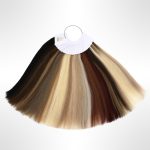
Routes Hair Extension Colour Ring
Can Fitting Too Little Hair Make Extensions Look Fake?
Yes. Too little extension hair can make a transformation look noticeably disconnected.
This becomes particularly important when adding substantial length.
Imagine extending relatively thick natural hair into much longer lengths using only a small amount of extension hair.
The upper section may retain plenty of density because it contains both the natural hair and extensions.
However, once the natural hair ends, only the extension hair remains.
If there isn’t enough of it, the bottom can suddenly appear much thinner.
That creates the familiar thin or stringy appearance that makes extensions easier to spot.
Therefore, the amount of hair required isn’t simply about how much volume the client wants.
It also needs to create sufficient density through the finished length.
Why Do the Ends of My Extensions Look Thin and Stringy?
Thin ends can occur when the amount of extension hair doesn’t adequately support the chosen length.
The longer the transformation, the more obvious insufficient density may become.
Natural hair thickness also matters.
Someone starting with relatively thick hair needs enough extension hair to create a believable continuation beyond the natural ends.
Otherwise, the density can drop suddenly.
Extension condition can contribute too.
Older hair that has experienced significant wear or shedding may gradually lose some of its original fullness.
Consequently, extensions that looked balanced when new can eventually appear thinner through the ends.
Before assuming you need an entirely different method, consider the relationship between natural density, extension quantity, length and current hair condition.
Can Fitting Too Much Hair Look Unnatural?
Yes. More isn’t always better.
Excessive extension hair can create unnecessary bulk and make the finished result appear disproportionate.
It can also affect comfort if the natural hair is being asked to support more weight than appropriate.
The aim should be balance.
Your technician needs enough extension hair to achieve the required length and density while keeping the finished result believable and suitable for your natural hair.
That quantity will vary from person to person.
Someone with naturally thick hair may require considerably more extension hair than someone with finer hair, particularly when both want the same finished length.
Therefore, pack counts or gram amounts shouldn’t be treated as universal rules.
The natural starting point should determine the recommendation.
If your main goal is additional fullness rather than length, we’ve covered extension choices for volume separately.
Which Hair Extensions Are Best for Volume?
Does Hair Extension Quality Affect How Natural They Look?
Yes. Hair quality can make a significant difference to the finished appearance.
Good-quality human hair should move, style and behave more naturally than poor-quality alternatives.
Texture matters.
If the extension hair has an obviously different feel, movement or appearance from the client’s natural hair, blending becomes more difficult even when the colour is reasonably close.
Shine can also affect the result.
Hair that appears excessively glossy or artificial next to natural hair may stand out.
Meanwhile, extension hair that quickly becomes dry, rough or frizzy can begin looking increasingly separate from the natural hair.
Quality becomes particularly important over time.
A set may initially look good, but maintaining that natural finish depends partly on how well the hair performs throughout its lifespan.
If you’re comparing different extension qualities, we’ve covered what makes premium extension hair different in a dedicated Q&A.
What Makes Premium Hair Extensions Different?
Why Does the Hair Extension Cut Matter?
Fitting is only part of creating a finished extension transformation.
Once the additional hair has been installed, the natural hair and extensions often need to be shaped together.
Without appropriate cutting and blending, you may still see where one finishes and the other begins.
This becomes especially important when there is a significant difference between the starting length and finished result.
The aim isn’t simply to cut the extensions shorter.
Instead, the technician or stylist needs to create a transition between the natural hair and added lengths while preserving the overall shape.
Layers may need careful consideration.
Likewise, the finished perimeter should look intentional rather than leaving sparse extension ends underneath a heavier natural baseline.
A technically secure fitting can therefore still look artificial if the finishing work isn’t right.
Can Hair Extensions Be Cut to Look More Natural?
Yes. Human hair extensions can be professionally cut and shaped after fitting.
In many transformations, this step makes a substantial difference to the finished result.
However, cutting extensions requires understanding how the natural hair and extension hair need to work together.
Removing too much extension hair can reduce the density needed to support the finished length.
Likewise, creating inappropriate layers may make blending more difficult rather than easier.
Therefore, the goal isn’t simply to cut until the visible line disappears.
A professional should consider the overall shape, natural density and desired finish.
We’ve covered cutting extensions separately if you’d like more detail on that specific question.
Can Poor Placement Make Extensions Look Fake?
Yes. Placement affects both visibility and blending.
Extensions need to sit in areas where the natural hair can appropriately cover and integrate with them.
If attachment points sit too close to exposed areas, they may become visible during normal movement or styling.
Likewise, poor distribution can leave some areas looking excessively bulky while others lack enough extension hair.
Placement around the sides of the head often requires particular care because natural density can differ from the back.
A good fitting therefore isn’t simply about creating neat rows.
Your technician needs to consider how the client’s natural hair falls, where additional density is required and how the finished hairstyle will move.
Do Visible Attachment Points Make Extensions Look Fake?
Visible attachments can make extensions more noticeable, but invisibility doesn’t mean attachments must never be seen under any circumstances.
If you deliberately lift sections of hair and search through the roots, you will naturally find the extension attachments.
The important question is whether they’re discreet during normal wear and styling.
Good placement should allow the natural hair to provide appropriate coverage.
However, someone with very fine hair or low density may require more careful positioning because there is less natural hair available to conceal the fitting.
Hairstyle matters too.
Certain high or tightly pulled styles can expose attachment points that remain completely hidden when the hair is worn normally.
Therefore, discretion depends on the fitting, natural hair and intended styling habits working together.
If you’re interested in what people mean by “invisible” extensions, we’ve covered that term separately.
What Are Invisible Hair Extensions?
Why Do My Extensions Look Obvious From the Side?
Side sections can be more challenging because the natural hair is often finer around the temples and sides than at the back of the head.
Therefore, there may be less hair available to cover extension attachments or blend into additional lengths.
Placement needs careful planning.
Adding too much hair can create bulk, while positioning extensions too close to visible areas may make attachments easier to spot.
However, avoiding the sides completely can sometimes leave the finished transformation disconnected if the back becomes substantially longer than the front.
A professional fitting balances these considerations according to the individual client.
Again, there isn’t one universal pattern that suits everyone.
Why Do My Hair Extensions Look Fake When They’re Straight?
Straight hair can make blending issues more obvious because the shape and density remain clearly visible.
Curls and waves naturally create movement and texture.
Consequently, they can sometimes disguise differences between the natural hair and extension lengths.
Once everything is straightened, however, a visible natural baseline or sudden drop in density may become much easier to see.
This doesn’t mean extensions should only look good when curled.
A strong fitting and appropriate blend should still create a convincing result when the hair is straight.
If you only like your extensions when they’re waved because straightening reveals obvious separation, the cut, density or length choice may need reviewing.
Why Do My Extensions Look Better Curled?
Curls can help natural and extension hair move together visually.
They break up obvious lines and create texture throughout the lengths.
Therefore, a transformation with minor blending limitations may appear more seamless once curled.
However, styling shouldn’t need to hide a fundamentally poor blend.
Ideally, your extensions should still look balanced in the styles you regularly want to wear.
If straight hair forms part of your normal routine, mention that during your consultation.
Your technician can then plan the length, quantity, placement and finished cut with that expectation in mind.
Can Dry or Damaged Extensions Start Looking Fake?
Yes. Extension condition affects how convincingly the hair blends.
When extensions are soft and well maintained, they move more naturally alongside your own hair.
As they become dry, rough or frizzy, however, the texture may start looking noticeably different.
That difference can make the extensions appear more obvious even if the original fitting and colour match were excellent.
Therefore, maintaining a natural result doesn’t end once the extensions leave the salon.
Aftercare plays an ongoing role.
Appropriate products, sensible heat styling and consistent maintenance help preserve the condition that allows the hair to continue blending well.
Routes Hair Extension Aftercare
Why Did My Extensions Look Natural at First but Fake Later?
If your extensions originally blended well but gradually became more noticeable, look at what has changed.
Hair condition is one possibility.
Dryness, tangling or repeated heat exposure can alter the texture of extension hair.
Colour can change too.
Environmental exposure, product build-up or other factors may cause the extension hair and natural hair to develop differently over time.
Density can also reduce as extension hair ages and experiences normal wear.
Meanwhile, your natural hair continues growing, which can alter how the original cut and blend sit.
Therefore, a result that changes months after fitting doesn’t necessarily indicate that the original fitting was wrong.
Instead, the extensions may need maintenance, refreshed blending or replacement depending on their overall condition.
What Should You Check If Your Hair Extensions Look Fake?
Rather than focusing immediately on the extension method, assess the complete result.
Consider:
- difference between your natural length and extension length
- density through the ends once your natural hair finishes
- colour match in both indoor and natural daylight
- tonal variation between your own hair and the extensions
- amount of extension hair used for the transformation
- quality and current condition of the extension hair
- finished cut and how well the two lengths blend
- placement and visibility of attachment points
- appearance when worn in your normal everyday styles
Often, one factor stands out immediately.
In other cases, several smaller issues combine to make the result feel less natural.
For example, a slightly ambitious length may still work beautifully with enough extension hair and excellent blending. Add insufficient density and a poor colour match, however, and the same length becomes much harder to disguise.
Can Fake-Looking Hair Extensions Be Fixed?
Often, yes.
What needs changing depends on why the extensions look unnatural.
A colour issue may require a better match or additional shade blending.
Insufficient density could mean more extension hair is needed where appropriate.
Meanwhile, a visible natural baseline may improve significantly with professional cutting and blending.
If the chosen length is simply too ambitious for the natural starting point, shortening the extensions may create a more believable result.
Poor-quality or heavily deteriorated extension hair may eventually need replacing.
Therefore, don’t assume the entire fitting needs removing before identifying the actual problem.
Ask an experienced extension technician to assess the transformation as a whole.
How Can You Make Hair Extensions Look More Natural?
Natural-looking extensions come from planning the complete transformation before fitting begins.
The chosen length needs to work with the natural starting point.
Colour should reflect the tones already present in the client’s hair. Meanwhile, the quantity of extension hair needs to provide enough density without creating unnecessary bulk.
Hair quality should allow the extensions to move and behave naturally.
Placement then needs to keep attachment points discreet while distributing the additional hair appropriately.
Finally, professional cutting and blending bring the natural and extension hair together.
No single element creates a seamless result on its own.
Instead, each decision supports the next.
Why Do My Hair Extensions Look Fake? The Key Point
Hair extensions usually look fake when something about the overall transformation doesn’t work naturally with the client’s own hair.
Length is one of the biggest considerations.
A dramatic increase can look excellent, but it requires enough extension hair and appropriate blending to create a believable transition.
Colour matching matters equally.
Natural hair often contains several tones, so the best match may involve more than simply choosing one shade that looks roughly similar.
The amount of hair fitted also influences the result.
Too little can create thin, stringy ends, while excessive hair can appear bulky and disproportionate.
Quality, placement and the finished cut complete the picture.
At Routes Hair Extensions, we believe natural-looking extensions come from treating the fitting as a complete transformation rather than simply adding hair. The right length, colour, density and quality need to work together with skilled application and professional blending.
When those elements are properly balanced, the finished result should look like your hair, just with the length, volume or thickness you wanted.
If your extensions don’t blend convincingly with your natural hair, we’ve explored that specific issue in more detail in our Routes Q&A library.